Biometric Verification: Ensuring Secure and Accurate Patient Identification
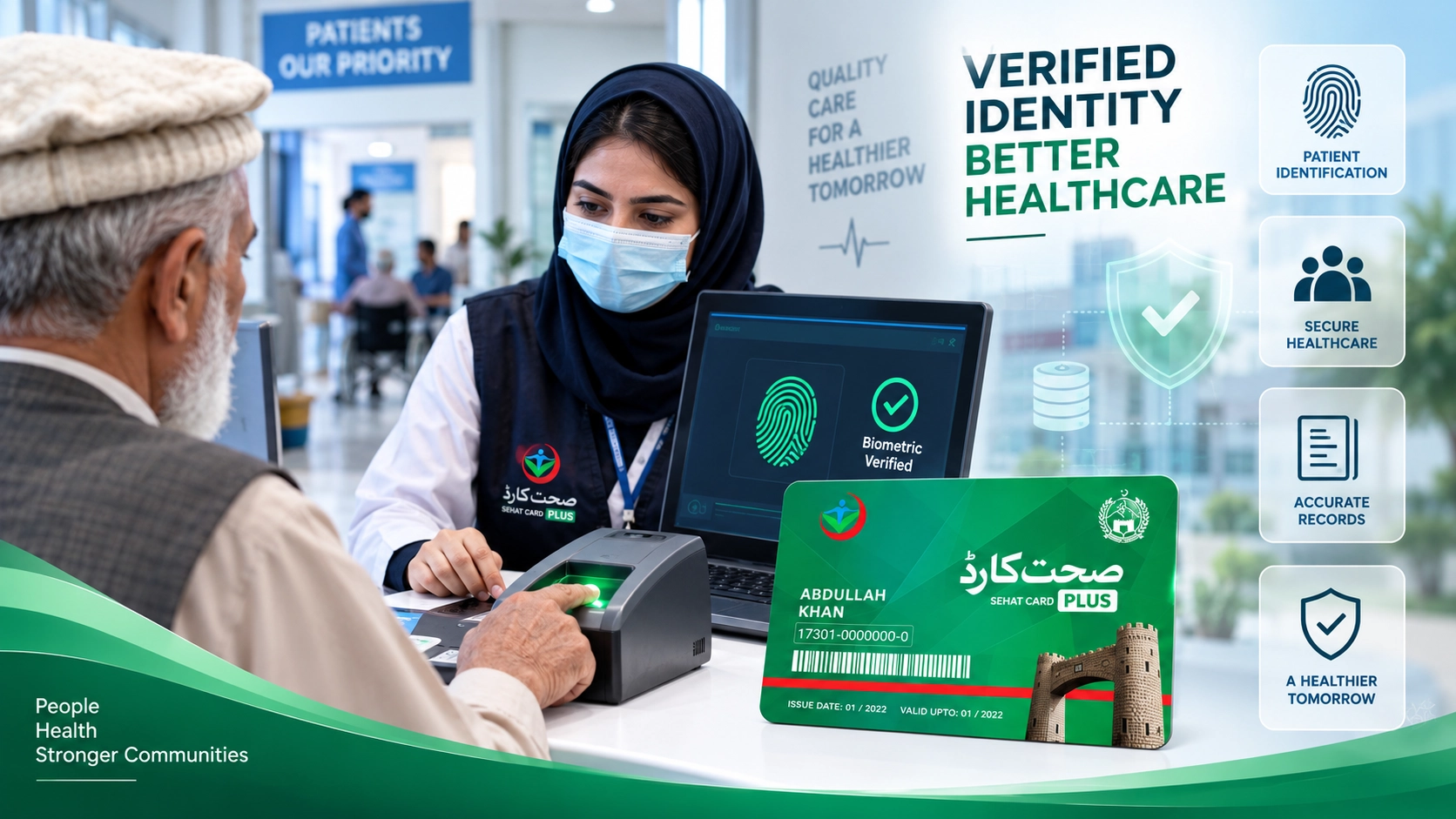
Biometric verification is an important part of the patient identification process under Sehat Card Plus KP. It helps ensure that healthcare services are provided to the correct beneficiary and that the patient’s treatment record is accurately linked to their identity.
Why Is Biometric Verification Performed?
When a patient seeks treatment under Sehat Card Plus KP, their identity needs to be verified before the admission process is completed.
The system uses the patient’s CNIC as the primary identity reference, with beneficiary information linked to NADRA records. This provides a reliable basis for verifying the patient’s identity and maintaining accurate treatment information.
Through this process, the identity of the patient can be confirmed against the available national identity record, helping ensure that the information provided at the hospital corresponds to the correct beneficiary.
The official admission process also requires patients to present their CNIC, while Form B is used for beneficiaries under 18 years of age. Health Facilitation Officers at Sehat Card Plus counters are responsible for initial identification and may request additional documentation where required.
One Patient, One Record
Patient identification is more than simply confirming a person’s identity at the time of admission.
By linking treatment information with the patient’s verified identity, the system supports a unified patient record. This helps connect inpatient treatment received under the program with the correct beneficiary rather than treating every hospital visit as an unrelated record.
In simple terms:
One Patient → One Verified Identity → One Connected Treatment Record
This approach helps maintain consistency in the patient’s treatment history across the Sehat Card Plus system.
What Happens When Biometric Verification Is Not Successful?
Biometric verification may not always be possible.
For example, there may be situations where a patient’s biometric verification cannot be completed successfully. In such cases, an alternative identification process can be used.
A photograph of the patient can be captured through a camera connected to the system to support the identification process.
This is particularly relevant for patients for whom biometric verification may be difficult or unsuccessful. The official Sehat Card Plus KP guidance also provides alternative identification arrangements for elderly individuals and children who may not be able to undergo biometric verification.
The objective remains the same:
To verify the patient’s identity and ensure that the treatment record is linked to the correct person.
What If the Patient Cannot Come to the Sehat Card Counter?
Some patients may be too seriously ill or injured to be brought to the Sehat Card Counter.
For example, a patient may be:
- – Seriously injured
- – In an emergency condition
- – Unable to leave the hospital ward
- – Physically unable to reach the counter
In such situations, the verification process can be carried out at the patient’s bedside in the hospital ward.
Through the District Medical Officer’s application, the patient’s biometric or photograph can be captured at the bedside, allowing the identification process to be completed without requiring the patient to be physically brought to the Sehat Card Counter.
This is particularly important in emergency and critical situations, where moving a patient may not be medically appropriate.
The official admission process includes the involvement of the District Medical Officer in inpatient cases and states that the DMO also visits the patient after admission for reconfirmation of identity and recording feedback.
A Verification Process Designed Around the Patient
Biometric verification is therefore not simply a fingerprint-scanning step.
It forms part of a broader patient identification process designed to:
- Verify the patient’s identity
- Match the patient with the correct beneficiary record
- Link treatment information to the patient’s identity
- Support accurate treatment records
- Provide alternative verification where biometric capture is unsuccessful
- Allow verification at the patient’s bedside when the patient cannot reach the Sehat Card Counter
The purpose is straightforward: the right patient should be identified with the right record throughout the treatment process.
Frequently Asked Questions
Why is biometric verification performed?
What if biometric verification is unsuccessful?
What about children?
What about elderly patients?
What if a seriously injured patient cannot reach the Sehat Card Counter?
Does verification mean the patient has to physically visit the counter?